Kamado, kettle and offset smokers compared
Three charcoal and wood machines, three different fires. How ceramic kamados, kettle barbecues and offset smokers behave in an Australian backyard — heat, capacity, wind and the learning curve.
Callum Hartley, Hardware editor · 22 March 2026 · 7 min read · 1,520 words
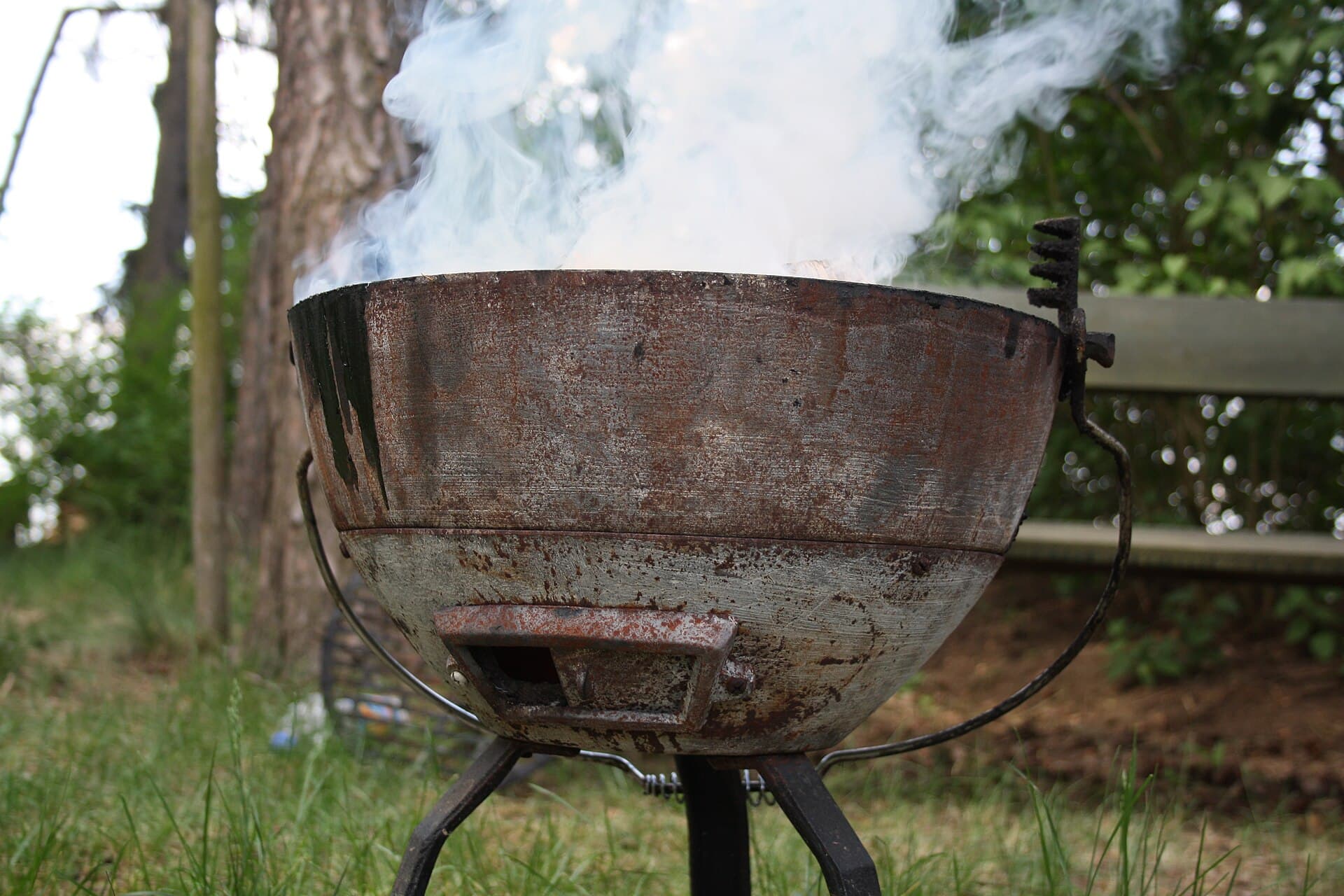
Photo: Kettle charcoal barbecue by Frettie. CC BY 3.0. Source: Wikimedia Commons. See image credits.

Charcoal is not one product. A kettle, a ceramic kamado and an offset smoker all burn wood or carbon, and they ask for three different skills.
Australians often buy the kettle first, because it is in every hardware aisle and because a bag of heat beads is at the servo. The kamado arrives when someone wants pizza and brisket from the same pot. The offset arrives when someone wants a firebox they can see.
If you are still choosing between gas and solid fuel, go back to how to choose a barbecue grill in Australia. If you already know you want a fire you manage, this page is the comparison.
The kettle: the teaching machine
A kettle is a thin steel bowl, a lid, a grate, and two vents. The classic 57 cm size will roast a chicken, grill six steaks, and smoke a small packer if you are organised. It will not feed a street party without batches.
The skill is the two-zone fire. Bank the beads on one side, leave the other side empty, and you have a sear zone and a safe zone. That is the same idea as indirect versus direct heat, drawn in charcoal.
Lighting is a chimney starter and twenty minutes, not a lake of mineral turps. How to light and control a charcoal grill is the technique piece. Here, the buying point is that a kettle is cheap enough to learn on and honest enough that wind and vent position show up in the food.
Thin steel loses heat. In a Ballarat July you will use more fuel. In a coastal nor-easter you will chase the temperature. A tighter lid, a better gasket on newer kettles, and a brick or a water pan inside the bowl all help. A rusted vent that will not close does not.
Kettles live on a pad or on grass. They are light enough to move. They also rust if you leave them uncovered through a Darwin wet. Treat the lid like a steel appliance, not like a camp oven you can ignore.
The kamado: thermal mass in a ceramic egg
A kamado is a thick ceramic (or sometimes insulated steel) egg with a tight gasket, a firebox, a grate, and vents that act like a throttle. Kamado Joe and similar eggs are the usual Australian references. The shape is older than the brand.
What you buy is stability. Once the ceramic is at 120 °C or at 350 °C, it stays there if you stop fiddling. Fuel use is low. A load of lump can run a long cook. The same pot will take a pizza stone and a weeknight steak if you open the vents and wait.
What you pay for, besides the head, is weight and care. These machines want a solid, level stand. You do not drag them across pavers for a party. Ceramic can crack if you hose a hot firebox or if you wrench a seized band. The gasket is a consumable. The felt or the gasket tape is not optional decoration.
Capacity looks large because the pot is deep. In practice the grate is a circle, and a second grate for vegetables is how you feed six. A turkey or a Christmas ham fits. Two briskets side by side may not.
Kamados are still solid-fuel fires. They are restricted on many total fire ban days. They make less smoke than an offset when they are running clean, and more smoke than a gas trolley when you first light them. Neighbours in a terrace will notice the start-up.
A kamado rewards people who like set-and-watch cooking. It punishes people who lift the lid every four minutes to see if it is working.
The offset: a firebox and a long chamber
An offset is a horizontal smoker with a firebox on one end and a chimney on the other. You burn logs or a mix of wood and charcoal in the box. Heat and smoke travel across the grate and out.
This is the machine for people who want to manage a fire, not a vent. The food sits in a chamber that is milder than the box. You add a split when the temperature drops. You learn the lean — the way the far end of the grate runs cooler — and you rotate trays.
Australian offsets range from thin imported barrels to heavier steel cabinets. Thin metal is easier to push around and harder to hold at 110–120 °C when the southerly arrives. Thick steel and a decent firebox door are the difference between a hobby and a fight.
Fuel is wood. That means dry splits, a dry store, and a species that suits the meat. Ironbark, red gum and apple are the local starting list. Green wood and treated pine are not a flavour; they are a problem.
Offsets need space. The firebox radiates. The chimney stains whatever is downwind. A small courtyard is the wrong site. A backyard with a clear pad, a wood stack, and a neighbour who does not hang washing on your smoke line is the right one.
Capacity is the offset’s argument. A long chamber will take a brisket, a pork shoulder and a tray of vegetables. That is why people who cook low and slow brisket end up here after they outgrow the kettle.
Heat, time and the Australian climate
All three machines can grill hot and can smoke low. They do not do it with the same effort.
A kettle gets to steak heat quickly and drops quickly when you shut the vents. It is the weeknight charcoal grill. A kamado is slower to come up, then stubborn. Plan the pizza cook or the reverse-sear with that lag in mind. An offset is slowest to settle. You do not light it for two chops unless you enjoy the fire for its own sake.
Humidity and dew change the fire. A pellet cooker fights wet pellets; a kamado fights a wet gasket; an offset fights wet wood. Store fuel under cover. In the Top End wet, a kettle left closed and dirty will rust through the vent plate. See storing a barbecue through the wet season.
Wind is a kettle problem and an offset problem. A kamado’s mass shrugs off a breeze if the vents are set. An open firebox does not. Shelter the offset without boxing in the intake. The broader hood argument — even though these machines all have lids — sits in hood versus open grill in Australian wind.
Heatwave days change the cook more than the machine. You will not want to stand over an offset at 42 °C. A kettle with a short, early cook is kinder. Cooking through an Australian heatwave is the calendar, not the hardware.
Bushfire bans are the hard stop. Solid fuel is the first thing a total fire ban removes. Gas may still be legal. Keep a trolley or a portable if you live in a district that shuts charcoal down for days. Bushfire-season barbecue safety is not optional reading.
Cost, parts and the learning curve
Talk in classes. A kettle is the entry spend: bowl, lid, grate, chimney, a bag of beads. Spare grates and vents exist. You can replace a rusted bowl cheaper than you can replace a cracked ceramic.
A kamado is a premium spend plus a stand, a cover, and the first gasket. Parts are brand-specific. A cracked firebox is an expensive lesson in not drowning a hot ceramic.
An offset is a wide spend. Cheap barrels warp. Heavy steel is a workshop item. Grates, gaskets and a chimney cap are serviceable. The ongoing cost is wood, not gas.
Time is the other currency. A kettle weeknight is forty minutes including lighting. A kamado weeknight is longer because the ceramic wants a preheat. An offset Saturday is a morning.
Learn vents on the kettle. Learn patience on the kamado. Learn firewood on the offset. People who skip the first step and buy the third often own a cold rusty barrel by winter.
Which one for which household
A household that wants charcoal flavour and already owns gas: kettle. Use the gas for weeknights and the kettle for Sundays.
A household that wants one solid-fuel machine for pizza, poultry and the occasional brisket, and has a solid pad: kamado.
A household that wants to cook brisket and shoulders for a crowd, and has space and wood: offset. Keep a kettle or a gas portable for the nights you do not want a project.
A balcony or a strata courtyard: none of these, unless the by-law is unusually kind. See balcony and apartment barbecue rules.
A touring setup: a small kettle or a folding charcoal grill, and only where solid fuel is legal. The touring gas story is portable barbecues for camping and caravanning.
None of these machines is a personality test. They are different ways to hold a fire next to food. Pick the one whose maintenance you will actually do, then practise on a chicken before you invite people for a twelve-hour cook.
Questions readers ask
- Which charcoal barbecue should I buy first?
- A kettle. It is cheaper, it teaches two-zone fire, and it still roasts a chicken. Buy a kamado or an offset after you know you enjoy managing vents for hours.
- Can a kettle smoke a brisket?
- Yes, with a tight lid, a water pan or a snake of heat beads, and patience. An offset or a kamado holds the same temperature with less fiddling, which matters on a long Australian summer day.
- Is a kamado worth the extra weight?
- It is if you want ceramic thermal mass, efficient fuel use and a machine that can go from pizza heat to a low overnight cook. It is not if you cannot site 50 kg or more on a solid pad.
- Do offset smokers work in Australian wind?
- They work if the firebox is sheltered and you are willing to feed it. An open firebox in a southerly will run hot, then lean, then annoy you. A hooded kettle is more forgiving on a windy pad.
Keep reading
Built-in barbecue buying guide for Australia
A built-in barbecue is a wet-area renovation that happens to hold fire. Choose the head, the bench, the gas run and the drainage before anyone pours concrete.
Callum Hartley · 12 March 2026
Portable barbecues for camping and caravanning
How to choose a camping or caravan barbecue that survives Australian parks, bottle rules, wind and a boot full of other gear — without buying a patio trolley by mistake.
Tom Bellear · 2 March 2026
Weber Q, Family Q and Spirit buying guide
How portable Q-class, Family Q and Spirit-style trolley barbecues actually behave in Australian backyards — bottles, side tables, roasting and the limits of a compact hood.
Callum Hartley · 18 February 2026