Bushfire season barbecue safety
Total fire bans are local, they change with the day, and a backyard barbecue can be legal, restricted or forbidden. Check the fire service, then decide whether dinner belongs on the grill at all.
Tom Bellear, Outdoors editor · 20 June 2026 · 7 min read · 1,584 words
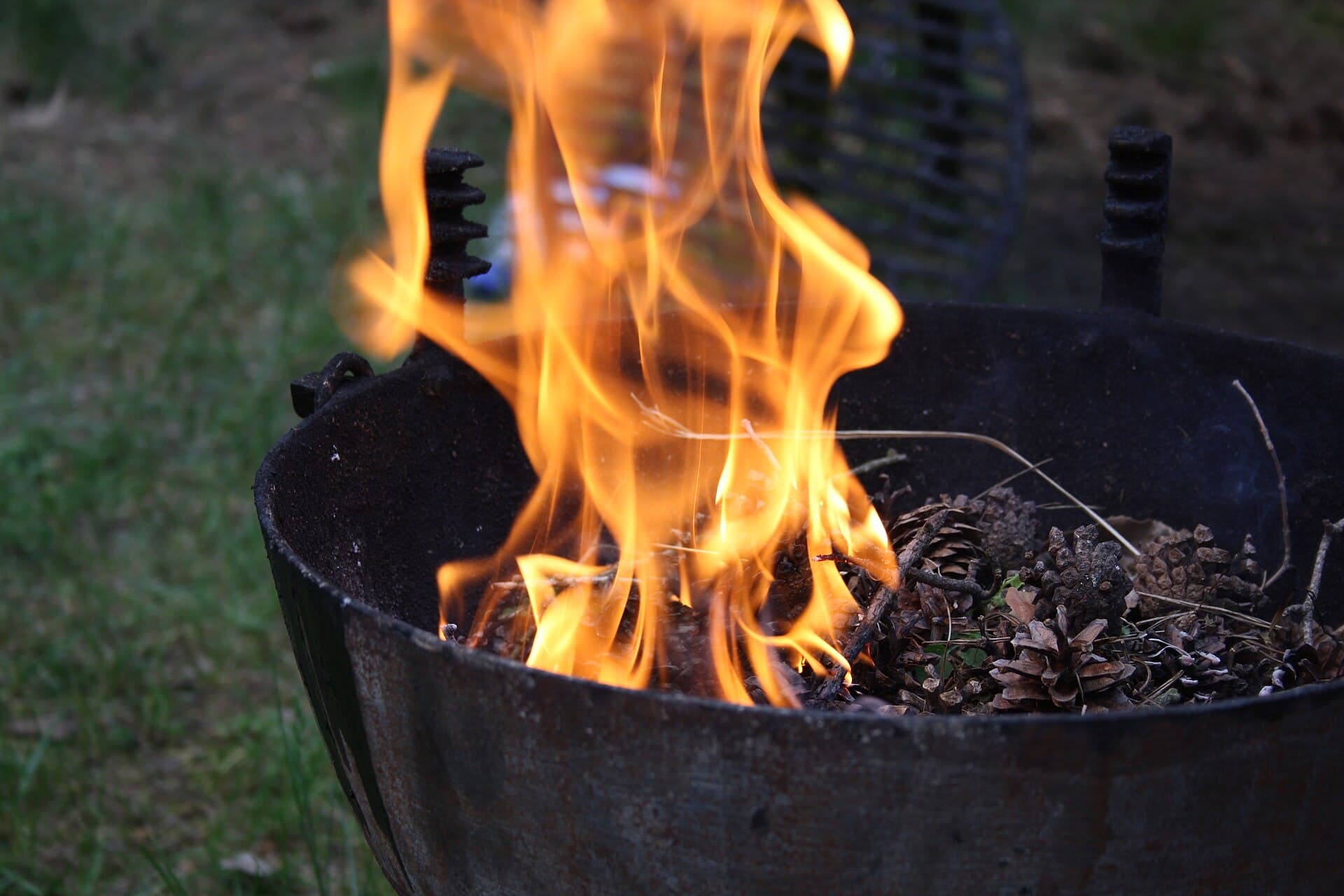
Photo: Charcoal barbecue with flames by Frettie. CC BY 3.0. Source: Wikimedia Commons. See image credits.

Bushfire season is not a mood and it is not only the weeks you see on the news. It is a set of local declarations that can turn a normal Tuesday cook into a restricted activity, a banned activity, or a foolish one even when the letter of the rule still allows a lid-down gas grill.
This article is general information for an Australian backyard. It is not legal advice, not a substitute for your state fire service, and not a promise that last summer’s rule still applies. The only authoritative answer on a given day is the fire service that covers your ground.
The ban is local, not national
Australia does not run one barbecue law from Broome to Hobart. Each state and territory fire service publishes fire danger ratings and, when needed, declarations that restrict or ban the use of fire in the open. Names differ. “Total fire ban” is the phrase most backyard cooks know. There are also lesser restrictions, park rules, local government rules, and days when the rating is ugly but a ban has not been called.
The rating and the declaration are not the same thing. A Severe or Extreme day can arrive without a ban. A ban can arrive on a day that did not look dramatic from the kitchen window. Check both. Check the district you are actually in, not the city you identify with. A western-Sydney suburb and a Blue Mountains backyard are not always under the same instrument.
Do this in the morning of the cook, not the week you planned the menu. Declarations can be made the day before or overnight. If you are travelling to a picnic ground, check that ground. A permitted backyard appliance can still be illegal in a national park.
If you live in a strata building, you have a second document. Balcony and apartment barbecue rules do not override a fire ban, and a fire ban does not rewrite a by-law that already forbids charcoal. Follow the stricter.
What a total fire ban usually means for a barbecue
The pattern, across many declarations, is that open flame and solid fuel are treated more harshly than a well-controlled gas appliance, and that “in the open” includes a backyard. Charcoal kettles, heat beads, wood-fired ovens, fire pits, braziers and campfires are the first things to stop. A kamado is still solid fuel. An offset is still solid fuel. A pizza oven that burns wood is still a fire.
Gas is the grey zone people get wrong. Some declarations allow a gas barbecue if it is purpose-built, if it has a lid you can shut, if it stands in a clear area, and if you have a means of extinguishing it. Some days they do not allow it. Some allow gas only on a residential property and not in a reserve. None of those sentences is a national rule. They are the kind of condition you will see written on a fire-service page, and they change.
Electric barbecues and indoor cooking are often the remaining options. “Often” is not “always.” Read the day’s list. If the list is silent on electric, do not invent a permission, and do not invent a ban. Use the published examples and the information line.
What you can usually still do, even on a hard day, is cook inside. An oven, a stove grill plate, a rice cooker and a salad are not a failure of Australian identity. They are how you feed people when the paddock behind the fence is ready to go.
What you cannot do is the folklore list: a quick charcoal “because it is just a small kettle,” a wood chip tray on the gas grill if solid fuel is banned, a fire pit for the kids, or a burn-off of the back corner while the snags are on. If you are unsure whether a pellet smoker counts as solid fuel, treat it as solid fuel until the fire service says otherwise. Pellet smokers in Australia are still burning wood.
Check the fire service for the day and the place. Then cook, or do not.
Ember attack around the house
On a bad day the barbecue is only one ignition source. Ember attack is the shower of burning fragments that rides a wind into gutters, doormats, mulch and the gap under a deck. You do not have to be in a forest. Grassland, a reserve at the end of the street, and a neighbour’s unmanaged block are enough.
If the rating is high, look at the five metres around the grill the way you would look at a workplace. Move the coir mat. Move the stacked kindling, the paper bags of beads, the recycling crate and the dry pot plant. Shut the outdoor cushions in a box. Clear the gutter above if that is your job and it is full of leaf. A grease-laden cover draped over a hot grill is a fuse; take covers off before you light, and put them back only when the appliance is cold.
Wooden decks and composite boards both burn. If your only cooking spot is a timber deck in a leaf pile, a ban day is not the day to test the clearance. Cook inside.
Hoses should reach. A hose that is on a winder in a locked shed is not a plan. Know where the meter tap is. Know how you shut the LPG bottle. These are dull sentences until the afternoon north-westerly arrives.
The same clear space is useful on ordinary days. Flare-ups, hot spots and grease fires start more house problems than lightning does in a suburb. Bushfire season just removes your margin.
Fuel, bottles and dry gardens
Store the things that burn as if the wind already picked them up. Keep LPG bottles upright, away from the house wall if you can, and never beside a stack of timber. A spare bottle in the sun against Colorbond is a bad still life. Do not store bottles in the shed with petrol and the mower if you have another option.
Charcoal, heat beads and firelighters are solid fuel and they are also a pile of carbon next to the house. A metal bin with a lid beats an open bag on the verandah. After a cook, ash stays in the cooker until it is cold. Cold means cold, not “pretty sure.” Then it goes into metal. Warm ash in a plastic tidy-bin has started plenty of quiet fires at midnight.
Gardens that look green from the street can still hold a mulch bed that behaves like a wick. If you water, water the mulch near the cooking area before a declared day, not with a theatrical hose once you have already lit. Do not use the barbecue as an incinerator for prunings on any day, ban or not.
If you run natural gas, know the isolation. If you run LPG, practise shutting the valve. The natural gas versus LPG choice is a buying article; on a fire day it is a shut-off article.
When the wind changes
The cook you started at eleven on a still morning is not the cook you still have at three. Wind lifts embers, flattens flames onto timber, and makes an open grill useless. If the wind freshens toward bush, grassland or a timber fence, shut the lid, finish or move the food inside, and turn the gas off at the bottle.
Do not chase temperature by opening vents on a charcoal kettle in a gale. You are feeding a blowtorch. If charcoal was legal when you started and a declaration comes into force, shut it down as the fire service directs. Remaining coals are still a fire. Close the vents, stay with them, and do not leave the yard.
Smoke from your grill on a severe day will be read by neighbours as a problem even if you are legal. That is not a reason to hide a cook. It is a reason to ask whether the cook is worth the call-out. Courtesy and the rule can agree.
Heatwave days and fire days often arrive together. The food-safety problem is cooking through an Australian heatwave. Do not stack a ban, a 43°C westerly and a seven-hour brisket on the same afternoon.
After the cook
Stay with the appliance until it is safe to leave. Gas off at the knob and at the bottle. Charcoal vents closed, lid down, a metal area under the kettle, nothing stacked against it. Empty the grease tray when it is cool enough. A tray fire after you have gone inside is a classic suburban headline.
Tell guests the cook is finished. The helpful uncle who “just wants to burn the rest of the beads” is how restricted days go wrong. If you used a match or a lighter, put it away. If you had a hose run out, drain it and clear the trip hazard, but leave it where you can reach it until the box is cold.
If something did catch — a tea towel, a pot plant, a paling — treat it as a real fire. Call the fire service if it is beyond a tiny contained scorch.
Next time you plan a summer menu, plan the check: the local fire service page, and the habit of opening it. The care and safety hub is the rest of the unfashionable work. Dinner can be excellent in bushfire season. It just has to be the dinner the day allows.
Questions readers ask
- Can I use a gas barbecue on a total fire ban?
- Sometimes, in some states, if the appliance meets that day’s conditions — often a gas barbecue with a lid, in a clear area, with a way to put it out. Sometimes not. This is not a national yes. Check the fire service for your district that morning.
- Are electric barbecues allowed when a ban is on?
- Electric is often treated more gently than flame, but it is not automatically exempt. Read the declaration. If the building or park has its own ban, that can be stricter than the state page.
- What should I do with leftover charcoal after a restricted day?
- Let it go completely cold in the cooker, then store ash in a metal container with a lid. Do not dump warm coals into a garden bed, a plastic bin or a paper bag.
- Does a balcony height exempt me from a fire ban?
- No. Restrictions apply to the district, not the floor number. Apartment cooks still need the day’s rules and their strata by-laws. See our balcony guide for the building side of that problem.
Keep reading
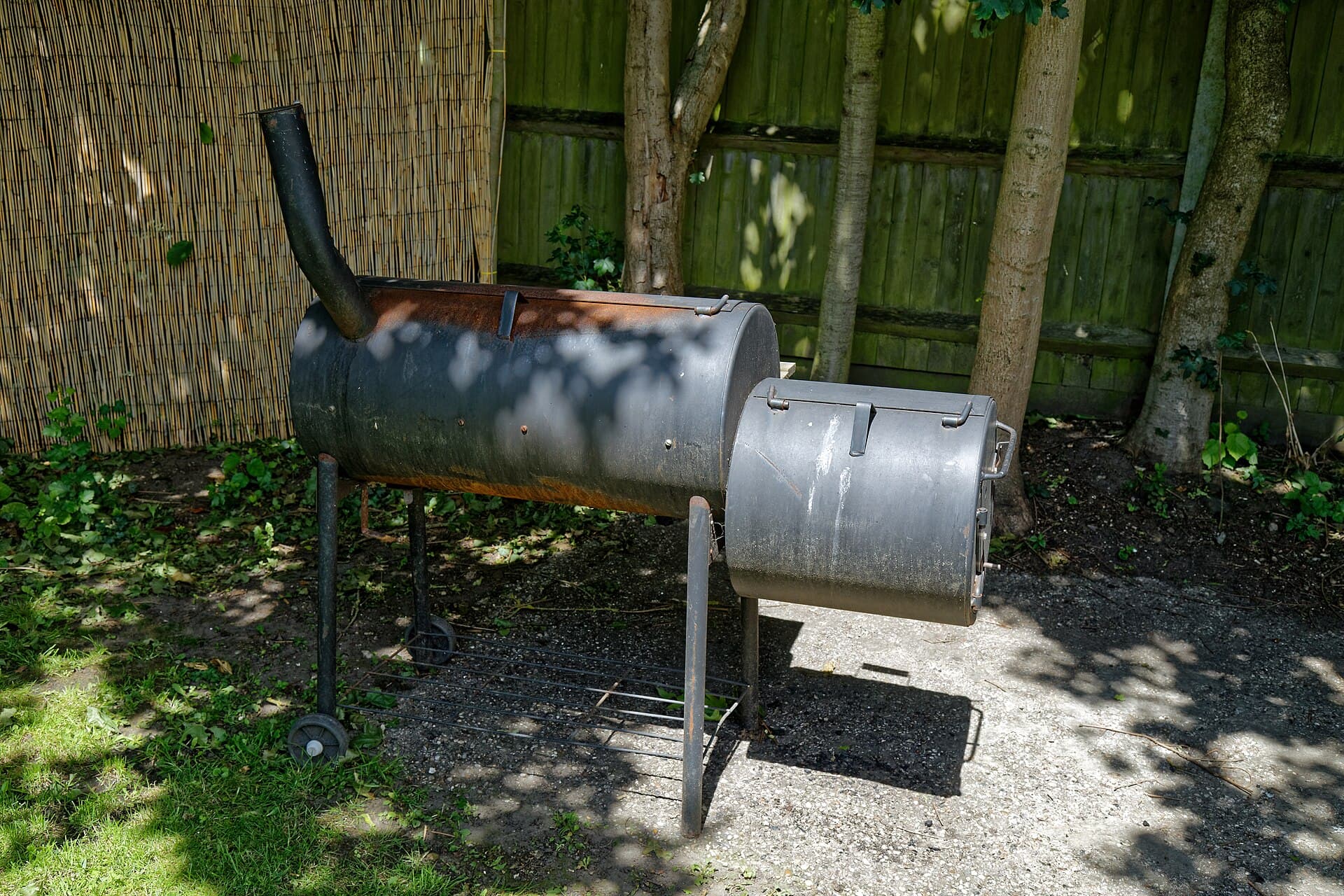
Storing a barbecue through the wet season
The Top End build-up and east-coast summer storms rust a barbecue faster than a winter in Melbourne. Clean it, dry it, keep the cover honest, and do not trap a wet machine in plastic.
Tom Bellear · 6 July 2026
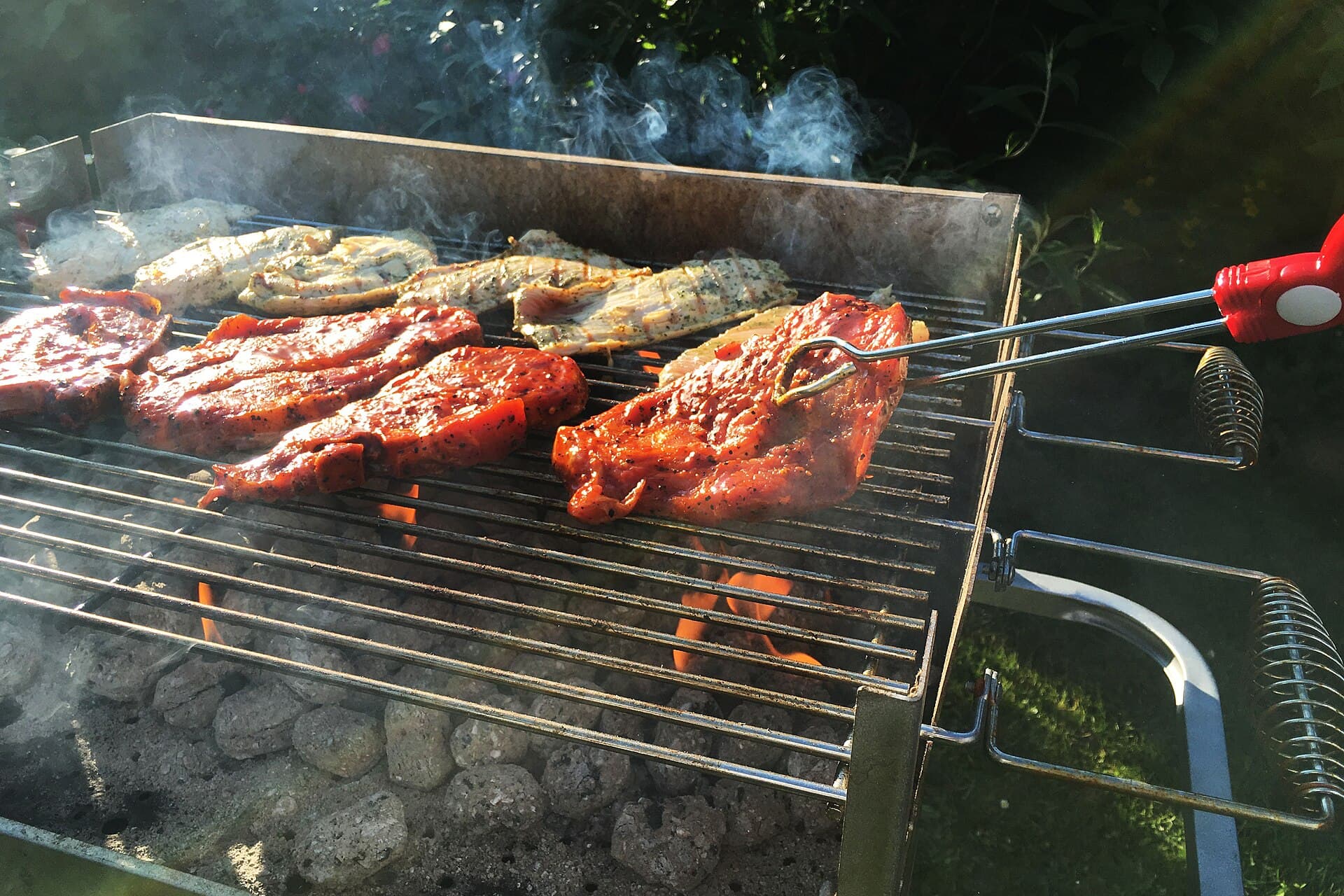
Flare-ups, hot spots and grease fires
A flare-up is fat meeting flame. A hot spot is uneven fire. A grease fire is a tray or tamer that has become fuel. They are related, and they are not fixed with a spray bottle of water.
Mina Rahman · 28 June 2026
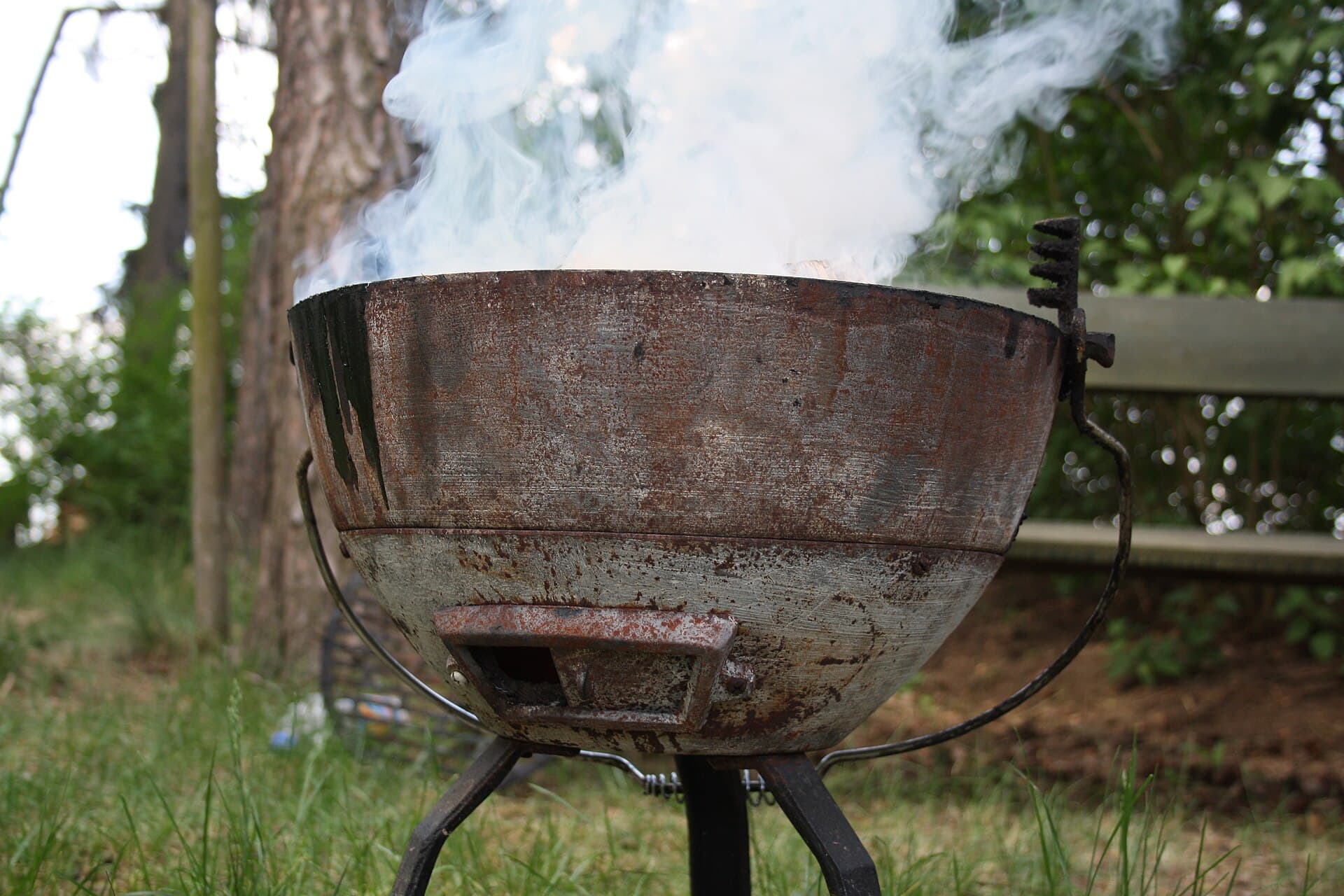
How to season a new barbecue
Seasoning is a thin polymer film on iron, not a flavour and not a wash. Do it once, then keep it with heat, oil and the right kind of cleaning.
Mina Rahman · 12 June 2026