Winter barbecue in southern Australia
A July cook in Victoria, Tasmania, South Australia, the ACT or southern New South Wales is a heat-retention problem. Wind, a lid and the early dark decide the menu more than the recipe.
Tom Bellear, Outdoors editor · 14 July 2026 · 7 min read · 1,579 words
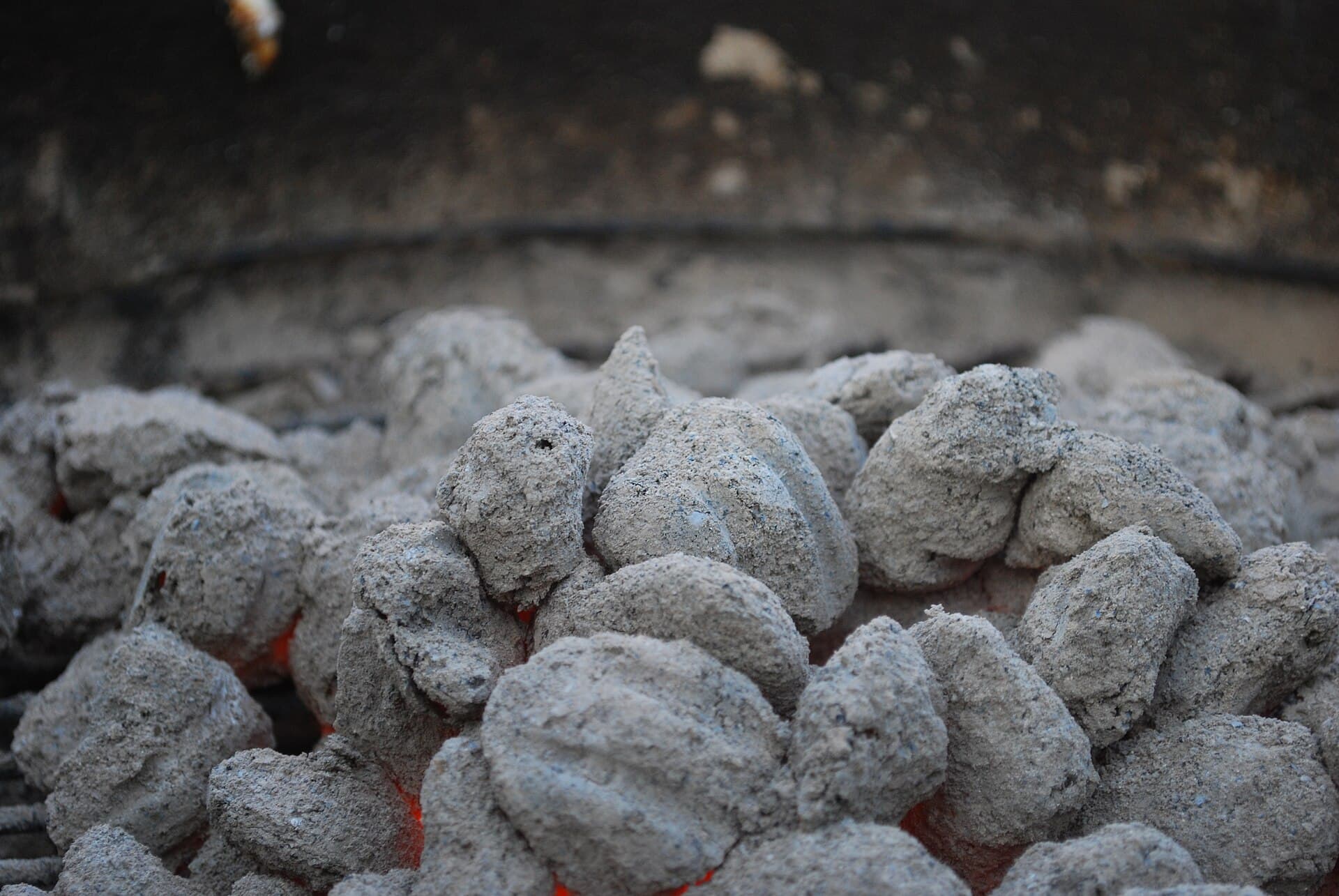
Photo: Smouldering charcoal briquettes by Juliancolton. Public domain. Source: Wikimedia Commons. See image credits.

Southern winter is not the end of barbecue season. It is a different season. The air is cold, the wind is personal, the day is short, and a grill that ran itself in January now needs a lid, a plan and a cook who is willing to stand in a jumper.
This is for Victoria, Tasmania, South Australia, the ACT and the colder half of New South Wales. Perth has its own wet winter; the Top End does not have this problem. If you want the humid opposite, that is the wet-season storage piece. If you want the January opposite, that is the heatwave piece. Today is Ballarat at four o’clock.
Winter is a heat-retention problem
Cold metal eats the first ten minutes of every cook. The grate, the plate, the lid and the air inside the box all start near the ambient temperature, which might be 8°C with a wind that feels like less. Until they are hot, food does not sear. It sits, it weeps, and it sticks.
Preheat longer than your summer habit. A gas four-burner that needed eight minutes in February may want fifteen or twenty in July with the hood down. A kettle wants a full chimney of beads and a lid-on rest before the meat goes on. If you skip this, you will chase the cook with higher and higher settings and then burn the second side.
Once the box is hot, keep it hot. Every lid-up is a dump of expensive heat into a dark garden. Work in batches that make sense. Have the salad and the bread done inside. Have the tongs and the tray in your hand before you open. This is the same discipline as hood versus open grill in Australian wind, only the wind is colder.
Two-zone fires earn their keep. Direct heat for the sear, indirect for the finish, so you are not standing over a flare with the lid off. The theory is in indirect versus direct heat. The winter use is: lid down on the indirect side while you warm your hands in your pockets.
Food itself is colder. A steak from a 4°C fridge onto an 8°C patio is a thicker thermal lump than the same steak in January. Give it twenty minutes out of the fridge, covered, in the kitchen, not on a side shelf in a southerly. Poultry and anything you care about from a food-safety angle still should not sit for hours in the danger band; the kitchen bench on a winter afternoon is not a Darwin bench.
Wind, lids and where you stand
Wind is the true opponent. It leans on an open grill and turns one burner into a blowtorch and the other into a pilot light. It steals the column of heat that a kettle needs. It makes you cook with your shoulders up, which makes you rush.
Put the trolley where the house, a fence or a screen takes the weather, without putting the grill under a low eave that will stain or catch a flare. Do not cook in a closed garage, a tent, or a sealed outdoor room with no flue. Carbon monoxide is not a winter myth. The verandah with one open side is the usual compromise.
A hooded barbecue is the correct winter tool. An open plate on a stand is a picnic appliance and a punishment in a Hobart westerly. If all you own is an open grill, borrow a windbreak that cannot melt or burn — masonry, a proper screen — and accept that dinner will be smaller.
Stand out of the eddy. Smoke that seems to follow you is you standing in the recirculation behind the lid. One step to the side is a technique. Face-away from the wind when you open the hood so the first puff does not go down your jumper.
Hands get stupid in the cold. Use proper tongs, not a fork, and do not hold a beer in the other hand when you are moving a full grate. Gloves that you can still feel a knob through are better than fashion gloves you will drop on the plate.
Lid down, wind off the box, and start before the light goes.
Fuel and preheat in the cold
Gas still works in winter. Bottles that are low can frost and sulk in near-freezing air; keep a bottle that is actually full, and keep it off a wet lawn. If the flame is suddenly weak, the bottle may be too empty or too cold, not the steak too thick. Swap or wait, and do not heat a cylinder with a torch.
Charcoal is slower to start when the beads have sat in a damp shed. Keep fuel dry. Use a chimney starter, dry paper or a clean firelighter, and shield the chimney from wind. Heat beads are consistent; lump is faster when it is dry and sulky when it is not. Either can be winter fuel. Both hate being dunked in methylated spirits by a cold, impatient cook.
Once lit, charcoal in a lidded kettle is excellent in July. The mass holds. This is why a winter whole chicken or a small low-and-slow brisket is not insane if you started at midday. It is insane if you light at five and hope. Pellets and kamados, if you have them, are winter machines by nature: insulated walls. They still need dry fuel and a cook who will not keep peeking.
Do a short empty burn after a wet week. You are drying the box as much as heating it. If you stored the grill badly, you will smell it. Fix that with the clean-and-dry habit, not with more sauce.
What to cook when the day is short
Winter menus should match the clock and the lid. Thick chops, a butterflied chook, sausages that can finish indirect, a piece of pumpkin on the cool side, and bread that only needs warming are friendlier than a dozen delicate items that need the lid up.
This is also the season of the holiday ham and the crowd that arrives at four because the sky is already failing. A Christmas ham on the barbecue is a lid-down cook with a glaze at the end, which is exactly how winter wants to work. Australia Day lamb is a January problem; a July lamb shoulder is allowed to be slower and covered.
Skip the open-grate theatre of thin prawns unless you have a plan and a hot box. They cool as fast as they cook. Do the seafood that can take a plate and a lid, or do seafood inside and meat outside.
Rest food in a warm kitchen, not on the side shelf. A steel tray on a winter bench is a heat sink. Tent the meat. The rest is part of the cook, and in July it needs shelter.
Batch the sides indoors. A winter barbecue that also tries to be the entire kitchen will run past dark and past the patience of guests who are dressed for a living room.
Lighting and safety after dark
Sunset in Hobart or Ballarat in July is a deadline. If you like cooking in the evening, light the space on purpose. A head-torch is useful and slightly ridiculous and better than a phone in your teeth. A fixed outdoor light that does not shine into the neighbour’s window is better again.
You must be able to see the flame, the knobs and the bottle valve. A gas leak is harder to notice when everyone is inside and the cook is a silhouette. Keep the path clear of the hose, the esky lid and the dog. Steps that are obvious at 2pm are a fall at 6pm with a tray of chicken.
Have a way to put the fire out that you can find in the dark. Know the bottle valve by touch. Do not leave a charcoal kettle “to die” against a timber wall while you eat a long dinner inside. Stay with it, or close it down properly and then eat.
Fire bans are rarer in southern winter but not impossible on a dry, windy day in the grasslands. Check if the rating is ugly. The habit belongs to bushfire-season barbecue safety even when the football is on.
Do not bring the burning kettle into the laundry to “keep it going.” Do not run a gas grill in a closed studio. The romantic picture of cooking in the snow is imported. The local picture is a hooded barbecue, a wool jumper, and a door you can get back through.
Keeping the cook pleasant
Comfort is not softness. A cook who is shivering turns food too often and declares it done because they want to leave. Put a mat down if the slab is ice. Wear shoes that can take a spark and a wet paver. Keep a dry towel inside the door, not over the handle of the grill.
Guests can stay inside until the lid is about to open. Winter hospitality is a warm room and a cook who is not also the waiter. If you are feeding a crowd, how to host a backyard barbecue for a crowd still applies; move the drinks indoors.
The australian seasons calendar is the point. January wants an early start. July wants a lid, a wind plan and a start that respects 5pm. Cook anyway. Just do not pretend it is summer with extra sauce.
Questions readers ask
- Does food take longer on a winter barbecue?
- Yes, if the cooker is losing heat to wind and a cold box. Preheat longer, keep the lid down, and trust a thermometer more than a summer timer.
- Is charcoal harder to light in July?
- It is slower when the beads are cold and damp and the breeze is cutting the chimney. Use dry fuel, a proper starter, and shield the lighting from wind. Do not drown it in accelerant.
- Can I barbecue after dark in winter?
- You can if the area is lit, the path is not a trip of hoses, and you can still see the flame and the bottle. Many cooks start earlier instead, because a 5pm sunset is a real deadline.
- Should I move the barbecue into the garage on a cold night?
- No. Combustion needs outdoor air, and exhaust belongs outside. A garage cook is a carbon-monoxide problem, not a clever winter hack.
Keep reading
Cooking through an Australian heatwave
A 42°C backyard is a food-safety problem before it is a recipe problem. Cook early, keep food cold, drink water, and use the oven when the yard is the worse kitchen.
Jess Nguyen · 8 January 2026
Storing a barbecue through the wet season
The Top End build-up and east-coast summer storms rust a barbecue faster than a winter in Melbourne. Clean it, dry it, keep the cover honest, and do not trap a wet machine in plastic.
Tom Bellear · 6 July 2026
Flare-ups, hot spots and grease fires
A flare-up is fat meeting flame. A hot spot is uneven fire. A grease fire is a tray or tamer that has become fuel. They are related, and they are not fixed with a spray bottle of water.
Mina Rahman · 28 June 2026